

Manufacturers generate enormous amounts of operational data every day. Production schedules, inventory transactions, purchasing activity, quality inspections, customer orders, and financial metrics all contribute valuable insight into business performance.
The challenge isn’t collecting data. It’s turning that data into meaningful information that supports faster, better decisions.
That’s why more manufacturers are investing in manufacturing dashboards that provide real-time visibility into every aspect of their operation.
In 2026, operational dashboards are becoming essential tools for executives, plant managers, production supervisors, and finance teams who need immediate access to performance metrics instead of waiting for static reports.
What Are Manufacturing Dashboards?
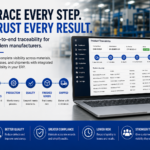
Manufacturing dashboards provide visual, real-time access to operational and financial data across the business.
Rather than searching through multiple reports or spreadsheets, decision-makers can monitor key performance indicators (KPIs) from a single interface.
Common dashboard metrics include:
- Production performance
- Work order status
- Inventory availability
- On-time delivery
- Equipment utilization
- Gross margin
- Sales performance
- Cash flow
- Labor productivity
These dashboards transform raw ERP data into actionable business intelligence.
Why Real-Time Visibility Matters
Manufacturing decisions often need to happen quickly.
Waiting until the end of the day—or worse, the end of the month—to review performance can allow small issues to become expensive problems.
Real-time dashboards allow manufacturers to:
- Identify bottlenecks early
- Monitor production performance throughout the day
- Track inventory shortages before production stops
- Respond faster to customer inquiries
- Improve operational coordination
The result is a more agile organization capable of adapting to changing conditions.
Turning KPIs into Action
Key performance indicators are only valuable if they drive meaningful action.
Manufacturers should monitor KPIs such as:
Production Efficiency
Measure throughput, downtime, and work center utilization.
On-Time Delivery
Monitor customer delivery performance and identify scheduling issues before deadlines are missed.
Inventory Accuracy
Track inventory availability and identify shortages or excess stock.
Order Backlog
Understand current workload and prioritize production effectively.
Financial Performance
Review revenue, margins, expenses, and profitability in real time.
When these KPIs are available instantly, managers can address problems before they affect customers.
Breaking Down Departmental Silos
Many manufacturers still rely on separate reports for different departments.
Production has one report.
Finance has another.
Sales maintains its own spreadsheets.
This fragmented approach limits collaboration and delays decision-making.
Integrated ERP dashboards provide every department with access to the same real-time information, creating a shared understanding of business performance.
Supporting Executive Decision-Making
Executives don’t need more reports.
They need better visibility.
Manufacturing dashboards help leadership:
- Monitor company performance
- Compare locations or business units
- Identify operational trends
- Evaluate profitability
- Support strategic planning
Rather than reacting to historical data, executives gain insight into what’s happening right now.
Improving Shop Floor Performance
Production supervisors benefit significantly from operational dashboards.
They can quickly monitor:
- Active work orders
- Production progress
- Labor allocation
- Equipment utilization
- Delayed operations
This visibility helps improve scheduling while reducing downtime and production delays.
Business Intelligence Supports Continuous Improvement
Manufacturing dashboards are not only operational tools.
They also support long-term improvement initiatives.
Historical dashboard data helps manufacturers:
- Analyze trends
- Measure improvement efforts
- Benchmark performance
- Identify recurring problems
- Improve forecasting
Continuous improvement begins with accurate information.
Why Dashboards Matter for Make-to-Order Manufacturers
Manufacturers producing configurable products manage significantly more complexity than traditional production environments.
Companies in:
- Cabinet manufacturing
- Millwork
- Door and window manufacturing
- Furniture manufacturing
- Architectural products
must monitor changing customer orders, production priorities, inventory availability, and engineering updates simultaneously.
Integrated dashboards provide the visibility required to coordinate these activities efficiently.
How Frontier ERP Delivers Operational Visibility
Frontier ERP provides manufacturers with integrated dashboards that connect operational and financial information across the organization.
Users can monitor:
- Production scheduling
- Inventory management
- Customer orders
- Financial performance
- Manufacturing KPIs
Because every department works from the same ERP platform, dashboard information remains accurate, current, and actionable.
Instead of waiting for reports, manufacturers gain immediate insight into business performance.
Looking Ahead
As manufacturers continue investing in automation, analytics, and digital transformation, operational dashboards will become even more valuable.
Organizations that embrace real-time business intelligence will be better positioned to:
- Improve efficiency
- Increase profitability
- Enhance customer service
- Support data-driven decision-making
- Scale operations confidently
Conclusion
Data alone doesn’t improve manufacturing performance.
The ability to understand and act on that data does.
Manufacturing dashboards provide the visibility manufacturers need to make faster decisions, improve operational performance, and strengthen financial results.
For make-to-order manufacturers, integrated ERP dashboards have become one of the most valuable tools for driving continuous improvement and long-term growth.
FAQ
What is a manufacturing dashboard?
A manufacturing dashboard is a real-time visual display of operational and financial KPIs that helps manufacturers monitor business performance and make informed decisions.
What KPIs should manufacturers monitor?
Common KPIs include production efficiency, inventory accuracy, on-time delivery, equipment utilization, labor productivity, revenue, and gross margin.
How do ERP dashboards improve manufacturing?
ERP dashboards provide real-time visibility into production, inventory, financials, and customer activity, helping manufacturers respond faster and improve operational efficiency.
Why are dashboards important for make-to-order manufacturers?
Make-to-order manufacturers manage highly customized production environments. Dashboards provide real-time insight into changing production priorities, inventory availability, and customer orders.