
Introduction
Digital transformation is no longer a future initiative for manufacturers. In 2026, it has become a critical driver of efficiency, profitability, and long-term growth.
For make-to-order manufacturers, where customization and complexity define daily operations, adopting modern technology is essential to staying competitive. From real-time production tracking to integrated ERP systems, digital tools are reshaping how manufacturers manage workflows, control costs, and deliver customer value.
This article explores how digital transformation is impacting manufacturing today and what it means for companies looking to scale in an increasingly competitive market.
What Digital Transformation Means for Manufacturers
Digital transformation in manufacturing involves integrating technology across all aspects of operations, including:
- Sales and quoting
- Engineering and configuration
- Production and scheduling
- Inventory and supply chain management
- Financial reporting and analytics
The goal is to replace disconnected systems and manual processes with a unified, data-driven environment that improves visibility and decision-making.
For make-to-order manufacturers, this transformation enables greater control over complex workflows and variable production requirements.
Why Make-to-Order Manufacturers Are Leading the Shift
Industries such as cabinetry, millwork, doors and windows, and furniture manufacturing are at the forefront of digital transformation.
Key Drivers:
- High product customization
- Complex production workflows
- Frequent design changes
- Tight margins requiring precise cost control
These challenges make traditional systems inefficient. Digital tools allow manufacturers to manage complexity more effectively while improving speed and accuracy.
Real-Time Visibility Is Changing Operations
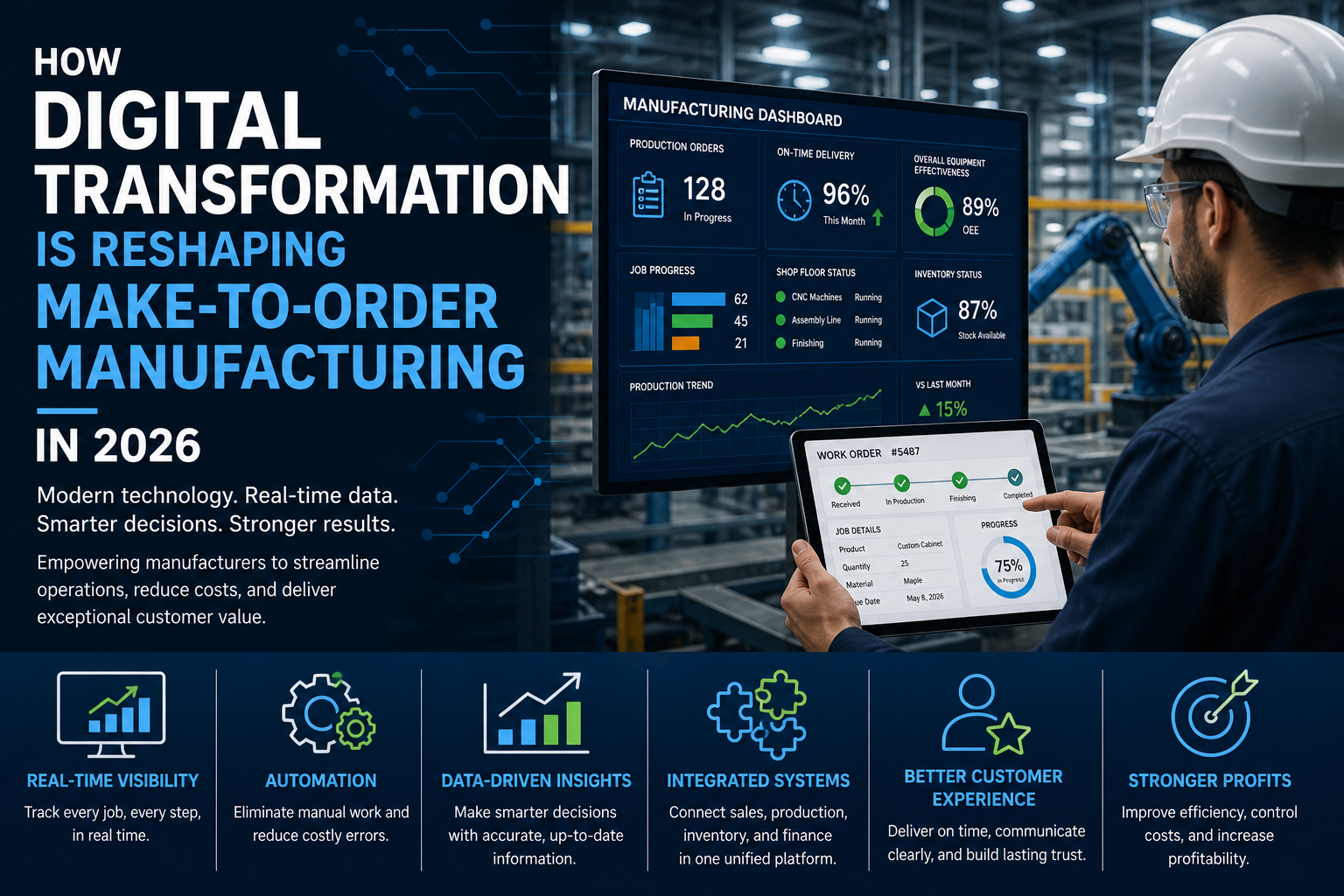
One of the most significant impacts of digital transformation is the ability to access real-time data.
Modern manufacturing systems provide:
- Live job tracking
- Work-in-progress visibility
- Machine and labor performance metrics
- Inventory status updates
This visibility allows teams to make faster, more informed decisions and quickly address issues before they disrupt production.
Automation Reduces Manual Work and Errors
Manual processes slow down operations and increase the risk of errors.
Digital transformation introduces automation that can:
- Streamline order processing
- Automate production scheduling
- Sync inventory levels in real time
- Generate reports automatically
Automation improves efficiency while allowing employees to focus on higher-value tasks.
Data-Driven Decision Making Improves Profitability
Manufacturers now have access to more data than ever before. The challenge is turning that data into actionable insights.
With integrated systems, manufacturers can:
- Analyze job profitability
- Identify cost trends
- Optimize resource allocation
- Improve forecasting accuracy
Data-driven decision-making helps manufacturers maintain margins and operate more strategically.
Integration Is the Foundation of Digital Transformation
Successful digital transformation depends on system integration.
Disconnected tools create inefficiencies and data silos. Integrated platforms connect:
- Sales and production
- Inventory and purchasing
- Shop floor activity and financial reporting
This creates a single source of truth, ensuring all departments work with consistent and accurate data.
Improving Customer Experience Through Technology
Digital transformation also enhances the customer experience.
Manufacturers can:
- Provide accurate quotes faster
- Offer realistic delivery timelines
- Communicate updates in real time
- Deliver consistent quality
These improvements build trust and increase customer satisfaction, leading to repeat business and referrals.
How Frontier ERP Supports Digital Transformation
Friedman Corporation’s Frontier ERP is designed specifically for make-to-order manufacturers and supports digital transformation by integrating:
- Product configuration and quoting
- Production scheduling and tracking
- Inventory and purchasing
- Financial management and reporting
By connecting these functions in a single system, Frontier ERP helps manufacturers streamline operations and improve visibility across the entire organization.
Challenges to Consider When Adopting Digital Tools
While digital transformation offers significant benefits, manufacturers should also consider:
- Change management and employee training
- Integration with existing systems
- Upfront investment and ROI planning
- Data accuracy and system adoption
A phased approach can help reduce risk and ensure successful implementation.
Looking Ahead
Digital transformation will continue to accelerate in the coming years.
Manufacturers that invest in modern systems today will be better positioned to:
- Scale operations efficiently
- Respond to market changes
- Improve profitability
- Deliver a superior customer experience
Those that delay may struggle to keep up with increasing complexity and competition.
Conclusion
In 2026, digital transformation is reshaping how make-to-order manufacturers operate.
By embracing integrated systems, real-time data, and automation, manufacturers can improve efficiency, reduce costs, and deliver better results for their customers.
For companies looking to stay competitive, digital transformation is not optional. It is a strategic necessity.
FAQ
What is digital transformation in manufacturing?
Digital transformation involves integrating technology into manufacturing processes to improve efficiency, visibility, and decision-making across operations.
Why is digital transformation important for make-to-order manufacturers?
It helps manage complexity, improve accuracy, and increase efficiency in environments where every product is customized.
What role does ERP play in digital transformation?
ERP systems connect different business functions, providing real-time data and improving coordination across departments.
Can small manufacturers benefit from digital transformation?
Yes. Even smaller manufacturers can improve productivity, reduce errors, and scale operations by adopting the right digital tools.