+1 847 948-7180 sales@friedmancorp.com

How Manufacturers Can Reduce Lead Times Without Increasing Production Costs

Manufacturing team collaborating around production reports and planning documents in an industrial environment, illustrating how real-time visibility, automated workflows, and ERP software help reduce manufacturing lead times.

Customers expect shorter lead times than ever before. Whether you’re manufacturing cabinets, architectural millwork, windows, doors, furniture, or other configurable products, your ability to deliver quickly has become a major competitive advantage. Unfortunately, reducing lead times isn’t as simple as adding more labor or increasing production capacity. Manufacturers that attempt to speed production without improving their processes often create bottlenecks, increase costs, and reduce quality. In 2026, successful manufacturers are reducing lead times by improving visibility, automating workflows, and…

Read More >>

Why Production Scheduling Is the Backbone of Modern Manufacturing Success

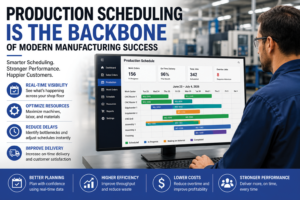
Production scheduling software dashboard displaying real-time work orders, production timelines, resource allocation, and shop floor scheduling for make-to-order manufacturers.

In manufacturing, every delayed job, missed delivery date, or production bottleneck often traces back to one common challenge: production scheduling. As manufacturers face labor shortages, supply chain disruptions, and growing demand for customized products, scheduling has become far more than simply assigning work orders. It has evolved into a strategic function that directly impacts profitability, customer satisfaction, and operational efficiency. For make-to-order manufacturers, production scheduling software integrated with ERP systems provides the visibility and flexibility needed to adapt quickly…

Read More >>

Product Configuration Management: Why Manufacturers Are Prioritizing It in 2026

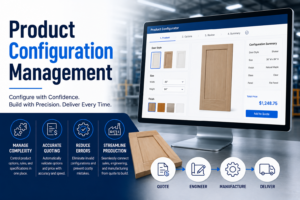
Product configuration management software dashboard displaying configurable product options, automated pricing, quote generation, and manufacturing workflow integration for make-to-order manufacturers.

Manufacturers producing configurable products face increasing pressure to deliver customized solutions faster, more accurately, and with fewer operational errors. In industries such as cabinetry, millwork, doors, windows, furniture, and other make-to-order manufacturing environments, managing product complexity has become one of the biggest operational challenges. That is why more manufacturers are investing in product configuration management systems that connect sales, engineering, production, and pricing into a unified workflow. In 2026, effective product configuration management is no longer just a sales…

Read More >>