

Introduction
In make-to-order manufacturing, change is constant.
Customers request design revisions, engineering teams update specifications, suppliers discontinue components, and production schedules shift to meet evolving demand. While change is inevitable, poorly managed engineering changes can quickly become one of the most expensive problems a manufacturer faces.
An outdated drawing, an incorrect bill of materials, or a missed specification update can result in production delays, scrap, rework, and dissatisfied customers.
In 2026, manufacturers are improving speed and accuracy by implementing structured engineering change management (ECM) processes supported by integrated ERP systems.
What Is Engineering Change Management?
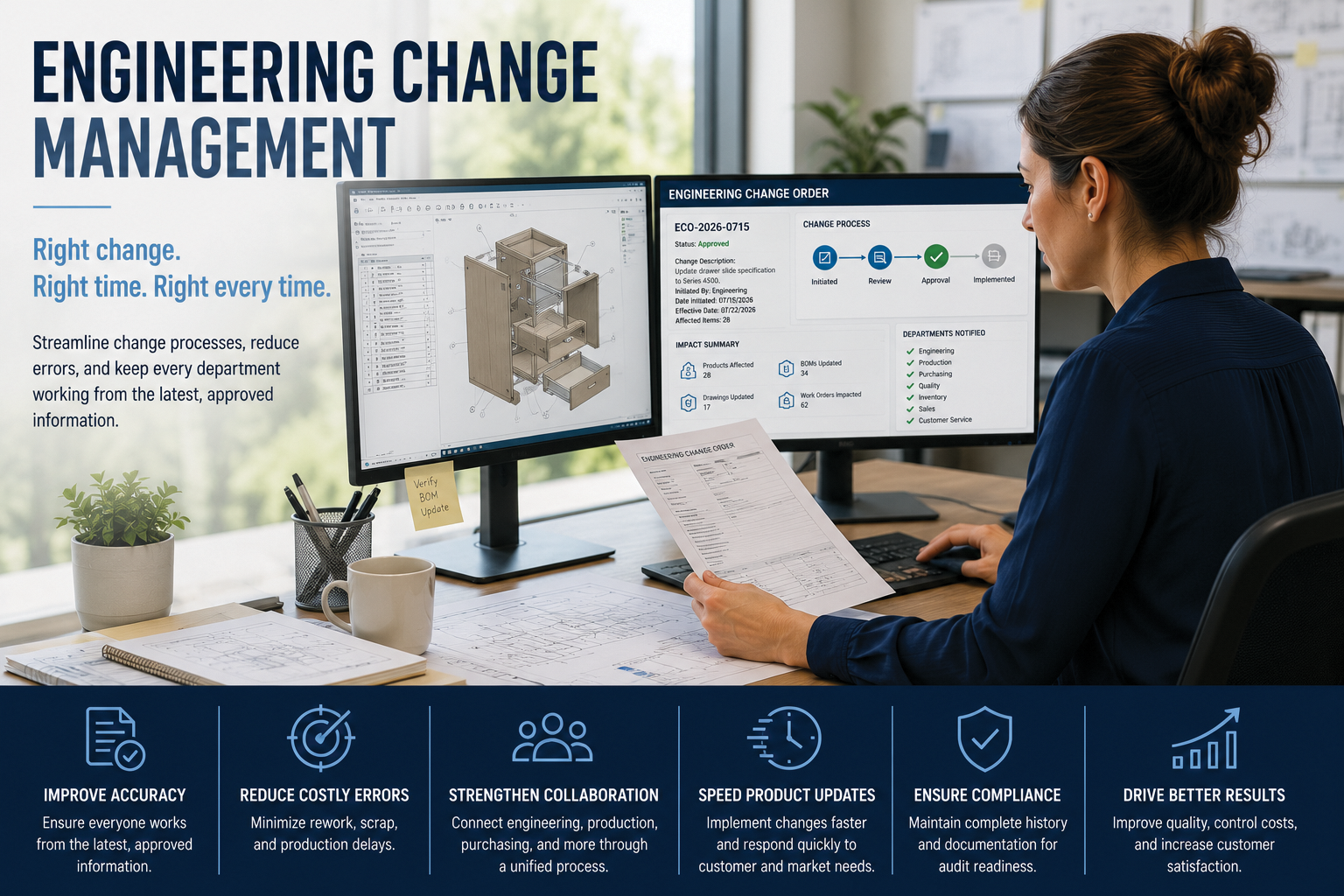
Engineering Change Management is the structured process of creating, reviewing, approving, implementing, and documenting changes to products and manufacturing data.
These changes may include:
- Product specifications
- Bills of materials (BOMs)
- Drawings
- Routing instructions
- Material substitutions
- Configuration rules
- Manufacturing processes
The objective is to ensure every department works from the latest approved information.
Why Engineering Changes Matter More Than Ever
Today’s manufacturers operate in environments where products evolve continuously.
Common reasons for engineering changes include:
- Customer customization
- Material shortages
- Supplier changes
- Cost reduction initiatives
- Quality improvements
- Regulatory requirements
Without a structured process, changes often lead to:
- Production mistakes
- Incorrect shipments
- Inventory write-offs
- Duplicate work
- Missed delivery dates
The Cost of Poor Change Control
Even a small engineering change can have significant consequences if it isn’t communicated effectively.
Potential impacts include:
- Manufacturing obsolete products
- Purchasing incorrect materials
- Reworking completed assemblies
- Delayed customer orders
- Increased labor costs
The financial impact often extends well beyond the engineering department.
Centralizing Engineering Data
One of the biggest challenges manufacturers face is keeping product information synchronized.
An integrated ERP system provides a single source of truth for:
- Product structures
- BOMs
- Routings
- Inventory
- Purchasing
- Production
- Sales
This eliminates conflicting versions of drawings and spreadsheets while improving collaboration across departments.
Improving Collaboration Across Teams
Engineering changes affect nearly every area of the business.
Successful ECM requires collaboration between:
- Engineering
- Production
- Purchasing
- Inventory
- Sales
- Customer Service
- Quality
Integrated workflows ensure that every department receives updated information as changes are approved.
Faster Product Updates
Manufacturers introducing new products or product enhancements need the ability to implement changes quickly.
A streamlined engineering change process allows organizations to:
- Reduce approval times
- Minimize production interruptions
- Launch products faster
- Improve responsiveness to customers
Supporting Make-to-Order Manufacturing
Manufacturers producing configurable products face greater engineering complexity than standard production environments.
Industries such as:
- Cabinet manufacturing
- Architectural millwork
- Door and window manufacturing
- Furniture manufacturing
must manage frequent revisions while maintaining production efficiency.
Integrated ERP systems help ensure engineering changes flow directly into production planning, inventory management, and customer orders.
Better Product Quality
Engineering change management improves quality by ensuring production teams always manufacture from approved specifications.
Benefits include:
- Fewer defects
- Less rework
- Improved consistency
- Better customer satisfaction
Quality begins with accurate engineering data.
Digital Change Management Supports Continuous Improvement
Engineering changes also provide valuable operational insight.
Manufacturers can analyze:
- Why changes occur
- Frequency of revisions
- Cost impact
- Quality trends
- Supplier performance
This information supports ongoing product and process improvement.
How Frontier ERP Supports Engineering Change Management
Frontier ERP provides manufacturers with integrated product data that connects engineering, production, purchasing, inventory, scheduling, and customer orders.
By centralizing product information, manufacturers can:
- Maintain accurate BOMs
- Improve version control
- Reduce production errors
- Accelerate engineering updates
- Improve collaboration across departments
Instead of managing changes through disconnected spreadsheets or manual communication, every team works from the same approved information.
Looking Ahead
As products become increasingly configurable and customer expectations continue to rise, engineering change management will become even more important.
Manufacturers that establish disciplined ECM processes today will be better positioned to improve quality, reduce costs, and respond quickly to market changes.
Conclusion
Engineering change management is no longer simply an engineering responsibility.
It is a business process that impacts manufacturing performance, customer satisfaction, and profitability.
For make-to-order manufacturers, integrating engineering change management with ERP software creates greater visibility, stronger collaboration, and fewer costly mistakes throughout the production lifecycle.
FAQ
What is engineering change management?
Engineering change management is the structured process of reviewing, approving, implementing, and documenting changes to product designs, bills of materials, routings, and manufacturing documentation.
Why is engineering change management important?
It helps manufacturers reduce production errors, improve product quality, accelerate product updates, and ensure every department works from the latest approved information.
How does ERP improve engineering change management?
ERP systems centralize engineering, inventory, purchasing, production, and sales data, ensuring approved changes are immediately reflected across the organization.
Which manufacturers benefit most from engineering change management?
Manufacturers producing configurable or make-to-order products, including cabinet, millwork, door, window, furniture, and architectural product manufacturers, benefit significantly from structured engineering change management.