
Introduction
Manufacturers today face increasing pressure to improve efficiency, reduce costs, and deliver products faster while managing complex, customized production environments.
In 2026, one of the most impactful ways to achieve these goals is through ERP and MES integration. By connecting enterprise-level planning with real-time shop floor execution, manufacturers gain the visibility and control needed to operate more efficiently and respond quickly to changing demands.
For make-to-order manufacturers, where every job is unique, this level of integration is no longer optional. It is essential.
What Is ERP and MES Integration?
ERP (Enterprise Resource Planning) systems manage high-level business processes such as:
- Order management
- Inventory and purchasing
- Financials and reporting
- Production planning
MES (Manufacturing Execution Systems) operate on the shop floor, tracking:
- Work orders and job progress
- Machine performance
- Labor activity
- Material usage
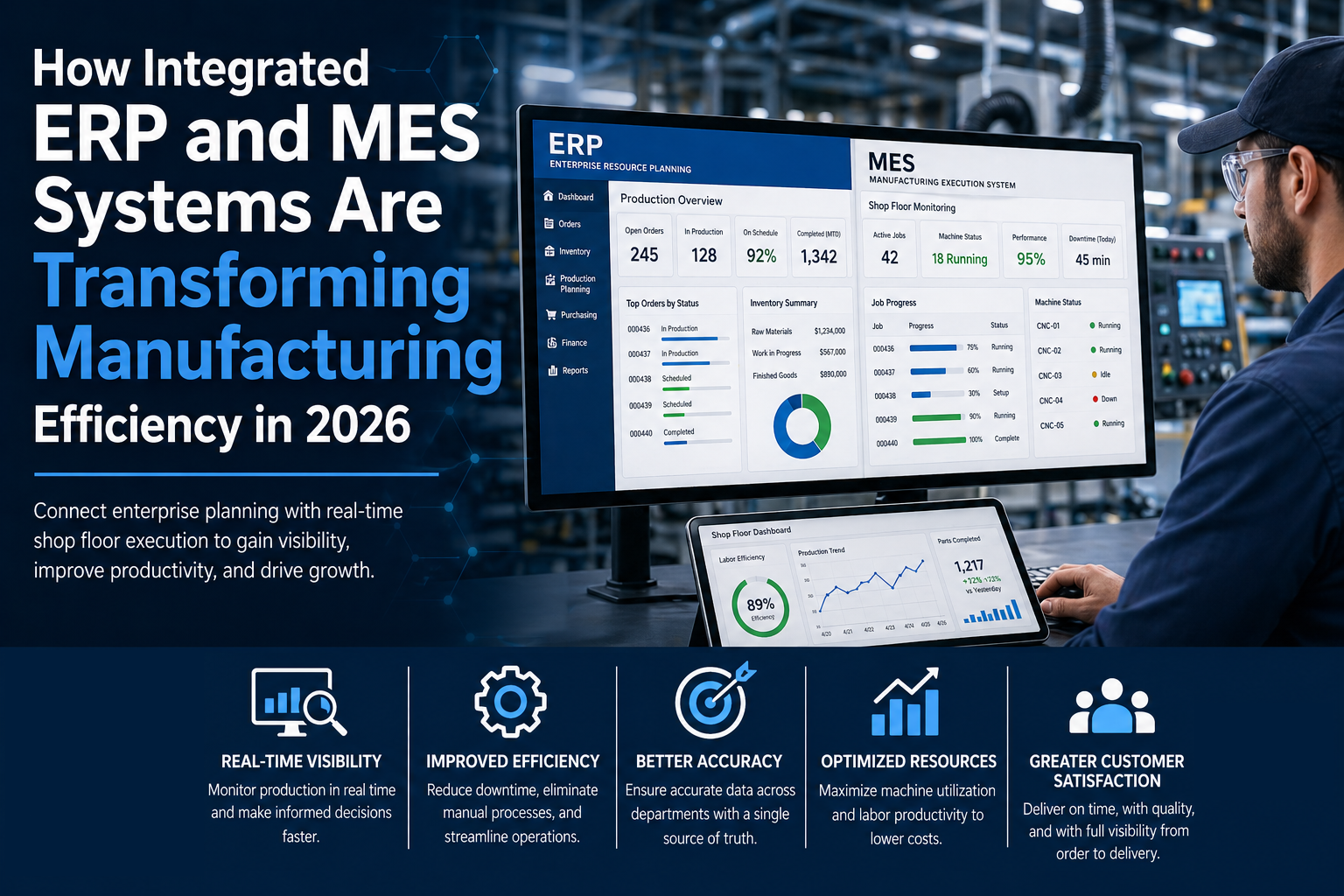
When these systems are integrated, data flows seamlessly between planning and execution. This creates a single source of truth across the organization.
Why Integration Matters More in 2026
1. Real-Time Visibility Is Now a Requirement
Manufacturers can no longer rely on delayed reporting or manual updates.
Integrated ERP and MES systems provide:
- Live job tracking
- Immediate production updates
- Accurate work-in-progress visibility
This allows teams to make decisions based on current data instead of outdated information.
2. Make-to-Order Manufacturing Requires Precision
In industries like cabinetry, millwork, doors, and windows, every order is different.
Without integration:
- Production errors increase
- Scheduling becomes inefficient
- Communication gaps slow operations
With integrated systems, manufacturers can ensure that every job flows smoothly from order entry to production.
3. Labor and Resource Optimization Is Critical
Labor shortages continue to challenge manufacturers.
Integrated systems help:
- Optimize workforce allocation
- Reduce downtime
- Improve productivity tracking
Managers can quickly identify bottlenecks and reallocate resources in real time.
Key Benefits of ERP and MES Integration
Improved Production Efficiency
By eliminating manual data entry and disconnected workflows, manufacturers can:
- Reduce delays
- Improve throughput
- Streamline operations
Enhanced Data Accuracy
Integrated systems ensure:
- Consistent data across departments
- Reduced errors in reporting
- Better forecasting and planning
Faster Decision-Making
With real-time insights, teams can:
- Adjust production schedules instantly
- Respond to disruptions quickly
- Improve delivery performance
Better Customer Satisfaction
Accurate production tracking allows manufacturers to:
- Provide reliable delivery timelines
- Improve communication with customers
- Meet expectations more consistently
How Integration Improves Shop Floor Visibility
One of the biggest advantages of ERP and MES integration is complete shop floor visibility.
Manufacturers can monitor:
- Job status at each stage of production
- Machine utilization and performance
- Labor efficiency and output
- Material consumption in real time
This level of insight helps identify inefficiencies early before they impact production schedules or profitability.
The Role of Automation in Integrated Systems
Automation plays a key role in maximizing the value of integration.
With automated workflows, manufacturers can:
- Trigger production updates automatically
- Sync inventory levels in real time
- Generate reports without manual input
- Reduce reliance on spreadsheets
Automation reduces human error and frees up teams to focus on higher-value tasks.
Why Make-to-Order Manufacturers Benefit the Most
Manufacturers producing customized products face unique challenges:
- Complex product configurations
- Variable production workflows
- Frequent schedule changes
Integrated ERP and MES systems provide the flexibility needed to manage this complexity while maintaining efficiency.
Industries that benefit most include:
- Cabinet and millwork manufacturing
- Door and window production
- Furniture manufacturing
- Glass and metal fabrication
Integration delivers measurable improvements in both operations and profitability.
How Frontier ERP Supports Integration
Friedman Corporation’s Frontier ERP is designed specifically for make-to-order manufacturers and offers built-in capabilities that connect:
- Sales and configuration
- Production scheduling
- Shop floor tracking (MES functionality)
- Inventory and purchasing
- Financial reporting
This unified platform eliminates the need for disconnected systems and provides manufacturers with a complete view of their operations from quote to delivery.
Looking Ahead
As manufacturing continues to evolve, integration will play an even larger role in operational success.
Manufacturers that invest in ERP and MES integration today will be better positioned to:
- Scale operations efficiently
- Improve profitability
- Respond to market changes
- Deliver a better customer experience
Conclusion
In 2026, ERP and MES integration is no longer a luxury. It is a necessity for manufacturers looking to stay competitive.
By connecting planning with execution, manufacturers gain the visibility, control, and efficiency needed to succeed in a complex and fast-moving industry.
For make-to-order manufacturers, integrated systems provide the foundation for smarter decisions, better performance, and long-term growth.
FAQ
What is the difference between ERP and MES systems?
ERP systems manage business processes like finance, inventory, and planning, while MES systems track real-time production activity on the shop floor. Integration connects these functions for better visibility and control.
Why is ERP and MES integration important?
Integration provides real-time data, improves efficiency, reduces errors, and enables faster decision-making across manufacturing operations.
Can small manufacturers benefit from ERP and MES integration?
Yes. Even smaller manufacturers can improve productivity, reduce costs, and scale more effectively with integrated systems.
What industries benefit most from ERP and MES integration?
Industries with complex, make-to-order production such as cabinet, millwork, door and window, and furniture manufacturing benefit the most.