

Introduction
In today’s competitive hardware distribution landscape, operational efficiency isn’t just a nice-to-have—it’s a growth imperative. From managing thousands of SKUs to coordinating complex supply chains, hardware businesses face unique challenges that legacy systems and spreadsheets can no longer support.
That’s where ERP implementation comes in.
Modern ERP software is reshaping how hardware companies operate, helping them streamline warehouse management, gain tighter inventory control, and scale with confidence. For warehouse managers, supply chain professionals, and logistics leaders, understanding the transformative impact of ERP is essential to staying ahead of customer expectations and market demands.
The Role of ERP Software in Hardware Business Growth
At its core, an ERP (Enterprise Resource Planning) system connects every major function of a business into one unified platform. For hardware distributors, this means financials, sales, purchasing, inventory, and warehouse operations all work from a single source of truth.
Without ERP software, many hardware businesses struggle with disconnected systems, manual data entry, and limited visibility across operations. These inefficiencies can slow order fulfillment, inflate carrying costs, and make it difficult to scale.
An ERP platform designed for hardware distribution addresses these pain points by:
-
Centralizing financial, sales, and inventory data
-
Eliminating data silos between departments
-
Enabling faster, more informed decision-making
With the right ERP system in place, hardware companies gain the operational foundation needed for sustainable growth.
Transforming Warehouse Management with ERP Implementation
Warehouse management is one of the areas where ERP implementation delivers immediate and measurable value. Hardware distributors often operate high-volume, fast-moving warehouses where even small errors can create costly delays.
ERP-driven warehouse management improves operations by providing:
-
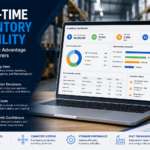
Real-time inventory visibility across bins, locations, and warehouses
-
Improved picking, packing, and shipping accuracy through barcode scanning and system-guided workflows
-
Optimized warehouse layouts and processes based on actual movement data
By reducing manual work and increasing accuracy, ERP software helps warehouses process orders faster, minimize errors, and improve customer satisfaction.
Inventory Control: Efficiency Gains Through ERP
Inventory control is a constant balancing act in the hardware industry. Stock too much, and cash gets tied up. Stock too little, and customer orders go unfulfilled.
ERP systems bring automation and intelligence to inventory management by:
-
Tracking inventory levels in real time
-
Automating replenishment based on demand and lead times
-
Reducing stockouts and overstock scenarios
-
Providing data-driven insights for smarter inventory planning
With ERP, inventory decisions are no longer reactive—they’re strategic. Hardware businesses can confidently maintain optimal stock levels while reducing carrying costs and improving service levels.
Supply Chain Optimization in the Hardware Industry
A strong supply chain is critical for hardware distributors that rely on multiple suppliers, variable lead times, and fluctuating demand. ERP software strengthens supply chain operations by improving coordination and visibility at every stage.
Key benefits include:
-
Streamlined procurement and supplier collaboration
-
Improved demand forecasting and order accuracy
-
Faster, more reliable fulfillment for customers
By aligning purchasing, inventory, and sales data, ERP systems help hardware companies respond quickly to market changes while building stronger relationships with both suppliers and customers.
Overcoming Common Challenges in ERP Implementation
While the benefits of ERP are significant, successful implementation requires careful planning and execution. Common challenges include change management, system integration, and measuring return on investment.
Hardware businesses can overcome these challenges by:
-
Prioritizing user adoption through training and clear communication
-
Integrating ERP with existing legacy systems where necessary
-
Establishing clear KPIs to track performance and ROI over time
Working with an experienced ERP partner—like Friedman Corp—helps ensure the system is configured to support real-world hardware distribution workflows, not just generic business processes.
Conclusion
ERP implementation can be a game-changer for hardware businesses looking to improve warehouse management, inventory control, and supply chain performance. By replacing disconnected systems with a unified ERP platform, companies gain the visibility, efficiency, and scalability needed to grow in an increasingly competitive market.
For hardware distributors ready to modernize operations and serve customers more effectively, ERP software isn’t just a technology investment—it’s a strategic advantage.