
+1 847 948-7180 sales@friedmancorp.com

Manufacturing Material Requirements Planning: 7 Ways to Prevent Shortages and Keep Production Moving

Manufacturing professionals reviewing material inventory and production requirements on a tablet in a modern window and door manufacturing facility.

A production schedule can look perfect on paper. The customer order is confirmed. Engineering has approved the specifications. Labor is available. Equipment is ready. Then production discovers that a critical component hasn’t arrived. Suddenly, a job that was supposed to start today is delayed. Purchasing scrambles to contact suppliers, planners rearrange schedules, and customer service faces difficult questions about delivery commitments. For manufacturers, material shortages are more than an inventory problem. They affect productivity, production capacity, costs, and customer…

Read More >>

How Manufacturers Can Reduce Lead Times Without Increasing Production Costs

Manufacturing team collaborating around production reports and planning documents in an industrial environment, illustrating how real-time visibility, automated workflows, and ERP software help reduce manufacturing lead times.

Customers expect shorter lead times than ever before. Whether you’re manufacturing cabinets, architectural millwork, windows, doors, furniture, or other configurable products, your ability to deliver quickly has become a major competitive advantage. Unfortunately, reducing lead times isn’t as simple as adding more labor or increasing production capacity. Manufacturers that attempt to speed production without improving their processes often create bottlenecks, increase costs, and reduce quality. In 2026, successful manufacturers are reducing lead times by improving visibility, automating workflows, and…

Read More >>

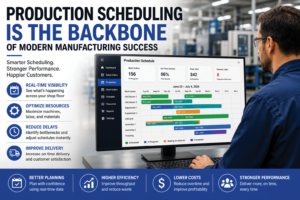
Why Production Scheduling Is the Backbone of Modern Manufacturing Success

Production scheduling software dashboard displaying real-time work orders, production timelines, resource allocation, and shop floor scheduling for make-to-order manufacturers.

In manufacturing, every delayed job, missed delivery date, or production bottleneck often traces back to one common challenge: production scheduling. As manufacturers face labor shortages, supply chain disruptions, and growing demand for customized products, scheduling has become far more than simply assigning work orders. It has evolved into a strategic function that directly impacts profitability, customer satisfaction, and operational efficiency. For make-to-order manufacturers, production scheduling software integrated with ERP systems provides the visibility and flexibility needed to adapt quickly…

Read More >>