
Manufacturers today operate in a business environment where speed, accuracy, and adaptability determine success. Between supply chain volatility, increasing customization demands, and persistent labor shortages, production leaders need immediate insight into what’s happening on the shop floor.
This is why real-time production visibility has become one of the most valuable capabilities modern manufacturing ERP systems can deliver.
For make-to-order manufacturers in industries like cabinetry, millwork, doors and windows, furniture, and metal fabrication, the ability to see live production data is quickly moving from a competitive advantage to a fundamental requirement.
In this post, we’ll explore why production visibility matters more than ever—and how ERP systems are evolving to support it.
The End of the “Black Box” Shop Floor
Traditionally, many manufacturing operations functioned with limited real-time insight into shop floor activity. Production updates were often communicated through paper travelers, manual status updates, or periodic supervisor reports.
While these methods worked in slower production environments, they create serious limitations in today’s high-mix, make-to-order manufacturing operations.
Without real-time visibility, manufacturers struggle to answer critical questions like:
-
Which orders are currently in production?
-
Where are bottlenecks forming?
-
Are we on schedule for delivery?
-
Are machines operating at expected capacity?
-
Is labor being allocated efficiently?
Modern ERP platforms are designed to eliminate this “black box” effect by connecting shop floor data directly to operational systems.
Why Production Visibility Matters in 2026
Several industry trends are accelerating the need for real-time manufacturing intelligence.
1. Customization and Make-to-Order Complexity
Manufacturers increasingly operate in configure-to-order or make-to-order environments, where every job may have unique specifications.
Without accurate tracking of materials, routing steps, and production progress, it becomes difficult to manage schedules and delivery expectations.
Real-time ERP integration allows manufacturers to track jobs through every production stage—from order entry to final shipment.
2. Labor Shortages Require Better Decision-Making
Manufacturing continues to face labor shortages across many skilled positions.
With fewer workers available, manufacturers must ensure labor is deployed as efficiently as possible. Real-time dashboards and performance analytics allow supervisors to identify slowdowns quickly and reallocate resources before productivity declines.
Instead of reacting to problems after the fact, teams can address issues as they occur.
3. Customers Expect Accurate Delivery Commitments
Today’s customers expect accurate lead times and consistent delivery performance.
When sales teams can see real-time production status inside the ERP system, they can provide customers with reliable updates rather than estimates based on outdated information.
This transparency improves both customer satisfaction and internal coordination between departments.
4. Supply Chain Disruptions Demand Faster Adjustments
Material shortages, transportation delays, and supplier variability remain common challenges in manufacturing.
When disruptions occur, manufacturers need immediate insight into how production schedules are affected.
Real-time ERP data allows companies to adjust job priorities, reroute production, or substitute materials without losing control of timelines.
How ERP Systems Enable Real-Time Production Insight
Modern manufacturing ERP systems deliver production visibility through several integrated capabilities:
Shop Floor Data Collection
Machine data, barcode scanning, and operator input feed live updates into the ERP system, ensuring production status is always current.
MES Integration
Manufacturing Execution Systems (MES) work alongside ERP platforms to track production steps, work center activity, and machine performance.
Live Job Tracking
Manufacturers can monitor every order’s progress through routing steps, identifying delays before they impact delivery.
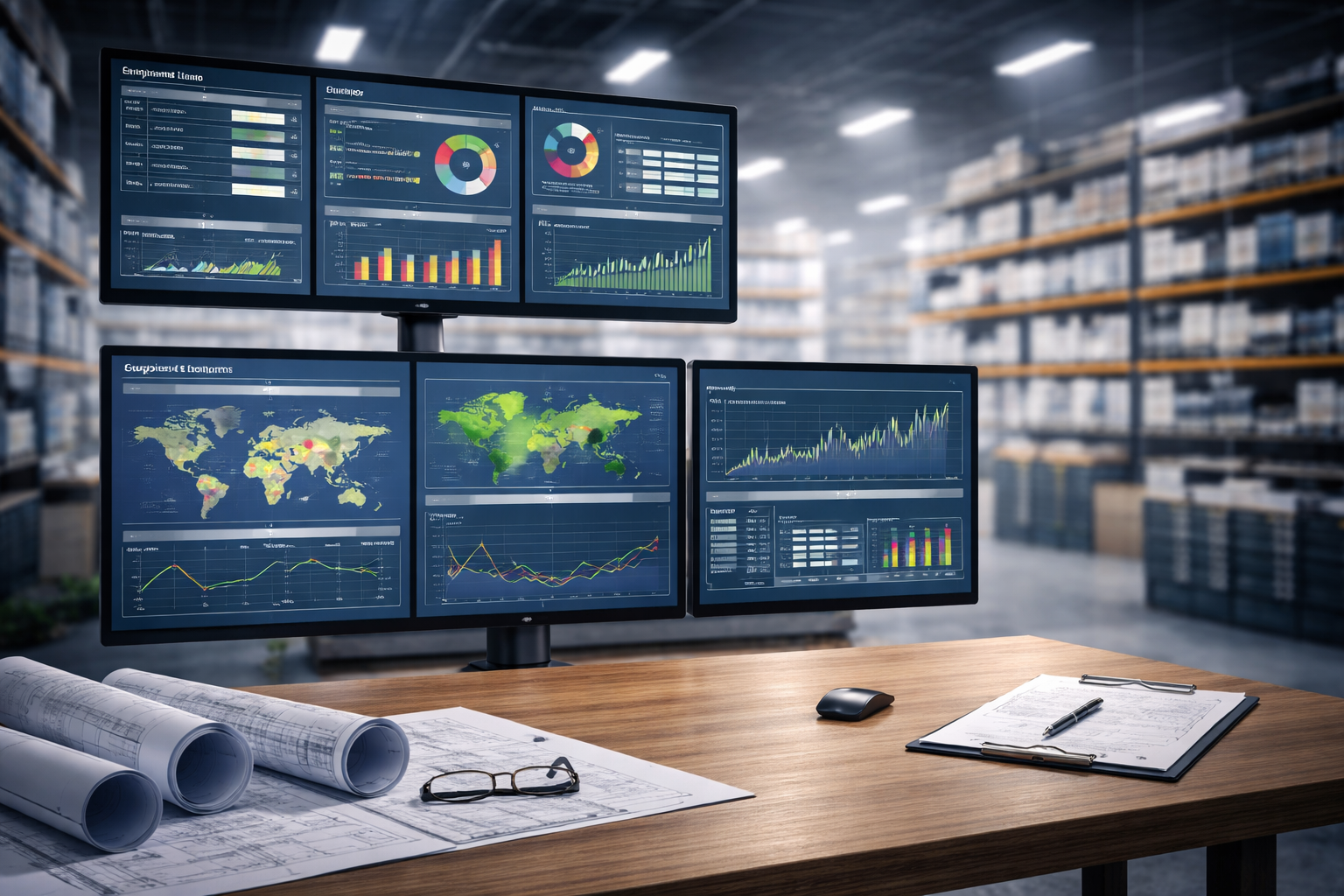
Performance Dashboards
Supervisors gain real-time insight into throughput, efficiency, downtime, and labor productivity.
Inventory Synchronization
Materials consumption is recorded automatically, ensuring accurate inventory levels throughout production.
Together, these tools create a connected production environment where operational decisions are based on real data rather than assumptions.
The Strategic Advantage of Operational Intelligence
Production visibility does more than improve day-to-day efficiency. It enables manufacturers to build what many industry analysts now call operational intelligence.
Operational intelligence allows companies to:
-
Identify systemic production bottlenecks
-
Improve scheduling accuracy
-
Optimize machine utilization
-
Reduce work-in-progress inventory
-
Increase on-time delivery rates
For make-to-order manufacturers, these improvements translate directly into stronger margins and improved competitiveness.
How Frontier ERP Supports Production Visibility
For manufacturers operating in complex make-to-order environments, Frontier ERP provides a fully integrated system connecting:
-
Order configuration
-
Shop floor tracking
-
Financial reporting
Because these functions operate on a shared data foundation, manufacturers gain a unified view of their operations—from quoting to final shipment.
This level of integration helps ensure production decisions are always supported by accurate, real-time information.
Looking Ahead
As manufacturing continues to evolve in 2026 and beyond, the importance of operational visibility will only increase.
Manufacturers who rely on disconnected systems or delayed reporting will struggle to keep pace with customer expectations and production complexity.
Those who adopt ERP systems that deliver real-time insight into their operations will be better equipped to navigate uncertainty, optimize resources, and scale their businesses effectively.
For companies operating in make-to-order industries, real-time production visibility is no longer a luxury—it’s a strategic necessity.