
Introduction
Managing manufacturing cost reduction is essential for small manufacturers aiming to improve profitability and remain competitive. Rising material costs, labor constraints, and operational inefficiencies can quickly erode margins if not proactively addressed.
By focusing on materials, labor, and overhead costs—and implementing practical, technology-driven strategies—manufacturers can control expenses without sacrificing quality or efficiency.
Here are seven proven ways small manufacturers can take control of their costs in 2026 and beyond.
1. Understanding the Types of Manufacturing Costs
Before reducing costs, manufacturers must clearly understand where those costs originate.
The three primary categories include:
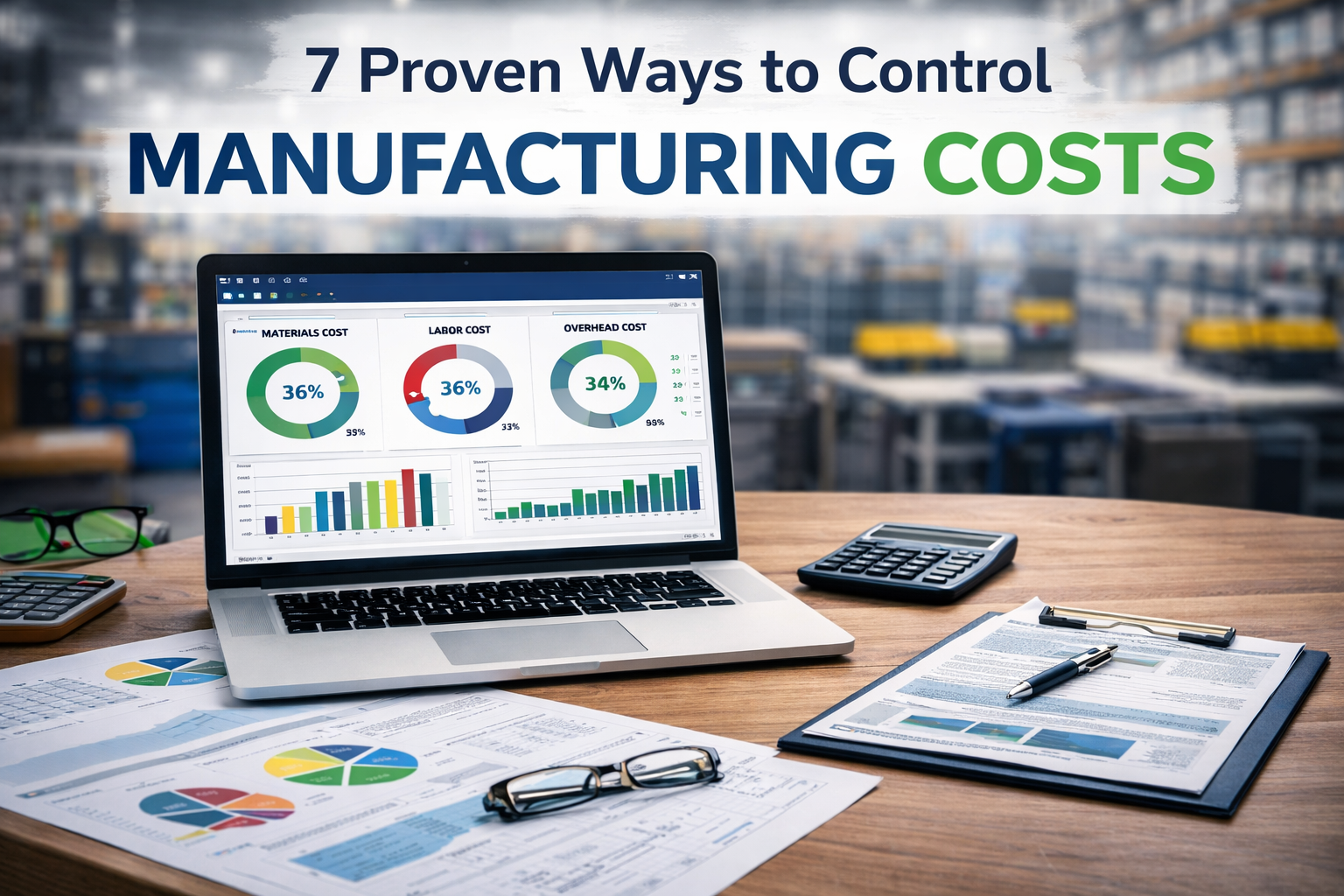
- Material Costs: Raw materials, components, and purchased goods used in production
- Labor Costs: Wages, benefits, and time associated with production and operations
- Overhead Costs: Indirect expenses such as utilities, equipment maintenance, and facility costs
For small manufacturers, even minor inefficiencies in any of these categories can significantly impact profit margins. Gaining visibility into these cost drivers is the first step toward meaningful cost control.
2. Implementing Cost Control in Your Production Process
Cost control should be a continuous process—not a one-time initiative.
Manufacturers can establish stronger cost control by:
- Tracking cost drivers at each stage of production
- Standardizing workflows to reduce variability
- Monitoring job performance against estimated costs
- Identifying and addressing inefficiencies in real time
Making cost control part of daily operations ensures issues are caught early, before they affect profitability.
3. Lean Manufacturing Techniques for Cost Management
Lean manufacturing remains one of the most effective approaches for reducing costs while improving efficiency.
Key lean principles include:
- Eliminating waste in materials, time, and motion
- Improving workflow efficiency
- Reducing excess inventory and work-in-progress
- Streamlining production processes
For example, optimizing shop floor layouts or reducing setup times can significantly lower operational costs without requiring major capital investment.
4. Reducing Material Costs Without Compromising Quality
Material costs are often one of the largest expenses for small manufacturers, making optimization critical.
Strategies include:
- Evaluating alternative suppliers or materials
- Negotiating pricing and contract terms with vendors
- Purchasing in bulk where appropriate
- Improving inventory management to reduce waste and obsolescence
Better visibility into material usage and purchasing patterns allows manufacturers to control costs while maintaining product quality standards.
5. Optimizing Labor Costs for Small Manufacturers
Labor remains a major challenge across manufacturing, particularly for small operations with limited staff.
Manufacturers can optimize labor costs by:
- Cross-training employees to increase flexibility
- Implementing efficient scheduling practices
- Reducing downtime through better planning
- Investing in tools and training that improve productivity
Rather than simply reducing headcount, the focus should be on maximizing the effectiveness of the existing workforce.
6. Leveraging Technology to Enhance Manufacturing Profitability
Technology plays a central role in modern cost management strategies.
Manufacturing software and ERP systems enable:
- Real-time cost tracking and reporting
- Accurate job costing and margin analysis
- Automated data collection from the shop floor
- Improved decision-making through data visibility
By connecting production, inventory, and financial data, manufacturers gain a clearer picture of where costs are increasing—and where improvements can be made.
For small manufacturers, adopting the right technology can be one of the most impactful steps toward sustainable cost reduction.
7. Evaluating and Adjusting Pricing Strategy
Cost control efforts must be aligned with pricing strategy to ensure profitability.
Manufacturers should:
- Regularly review pricing based on updated cost data
- Adjust quotes to reflect changes in materials or labor
- Analyze margins by product, customer, or job type
- Avoid underpricing due to outdated cost assumptions
A strong pricing strategy ensures that cost reductions translate into improved margins, rather than simply absorbing rising expenses.
Conclusion
Reducing manufacturing costs is critical for small manufacturers striving to maintain profitability and competitiveness in an increasingly complex market.
By understanding cost categories, implementing lean practices, optimizing materials and labor, and leveraging modern technology, manufacturers can take control of their operations and improve financial performance.
Ongoing evaluation and adjustment of cost management strategies will ensure long-term success—helping small manufacturers not just survive, but grow.
FAQ
What are the most effective ways small manufacturers can reduce manufacturing costs?
Small manufacturers can reduce manufacturing costs by understanding and tracking key cost categories, including materials, labor, and overhead. Implementing lean manufacturing techniques helps eliminate waste and improve efficiency, while cost control practices ensure better visibility into production performance.
Optimizing material sourcing, negotiating with suppliers, and improving inventory management reduce input costs. At the same time, enhancing labor productivity through cross-training and technology adoption helps control workforce expenses. Regularly evaluating pricing strategies alongside cost management ensures profitability is maintained without sacrificing product quality or customer satisfaction.