
Manufacturing has evolved over the years, specifically by replacing many manual tasks with automation. Most recently, ERP and AI technologies are more deeply embedded in daily operations, from streamlining routine processes to improving production planning and supply chain visibility.
As artificial intelligence gains momentum, concerns about the future of manufacturing jobs persist. The reality, however, is not about people being replaced by technology. It is about how roles are changing as ERP and AI work together to support smarter, faster processes. Even as the tools they use become more advanced, people still matter as the free-thinking human element behind strategic decisions.
AI Adoption in Manufacturing: What the Data Shows
Research from McKinsey Global Institute highlights the growing impact of AI and automation across industries, including manufacturing. The report notes that more than half of current work activities have the technical potential to be automated when combining AI agents and robotics. However, this does not mean jobs will disappear overnight. Adoption varies widely by industry, task, and business readiness, and full automation remains a gradual process.
More importantly, McKinsey emphasizes that most roles will evolve rather than vanish. Over 70% of skills used in today’s jobs fall into categories that cannot be fully automated or that require humans and machines to work together. These hybrid roles are expected to grow as organizations redesign workflows to integrate AI into existing operations. Demand for AI-related skills has increased significantly. This signals a shift toward roles that require employees to interpret data, manage systems, and make informed decisions based on AI-generated insights.
How Manufacturing Jobs Are Changing With AI
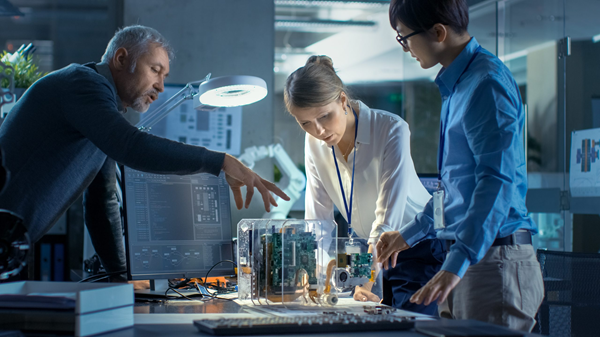
As AI becomes more common on factory floors and in warehouses, manufacturing jobs are shifting away from repetitive, manual tasks and toward higher-value responsibilities. Industry perspectives from Modern Materials Handling reinforce that people remain essential, even in highly automated environments like warehouses. Automation excels at speed, consistency, and handling predictable tasks, but it struggles with judgment, adaptability, and complex problem-solving.
Human workers continue to play a critical role in overseeing operations, managing exceptions, ensuring quality, and responding when systems encounter unexpected conditions. Rather than replacing workers, AI supports them by reducing physical strain, increasing visibility into operations, and enabling faster responses to issues. The human factor remains central, especially when decisions require experience, context, and collaboration across teams.
Manufacturing ERP Software as the Foundation for Automation
Manufacturing ERP software, like Frontier ERP, has been automating operations long before AI became a mainstream topic. ERP systems already manage analytics and reports, inventory control, order processing, production scheduling, shop floor operations, and financial reporting. These capabilities reduce manual data entry, improve accuracy, and create a single source of truth across departments.
When ERP and AI are combined, the impact becomes even greater. AI-enhanced forecasting can enhance demand planning. Predictive maintenance capabilities help reduce downtime by identifying issues before equipment fails. Intelligent alerts and analytics allow teams to focus on decision-making instead of data gathering.
The key advantage is not full automation but smarter automation. ERP and AI together streamline workflows and surface insights while leaving final decisions in the hands of experienced employees who understand the business, customers, and operational realities.
Frontier ERP: Supporting People, Not Replacing Them
Frontier ERP is designed to help employees do their jobs more efficiently by automating routine processes and simplifying access to critical information. By reducing the time spent on manual tasks, Frontier helps teams move more quickly to the human decision-making phase, where experience and judgment matter most.
With integrated data, configurable workflows, and analytics that can be enhanced with AI, Frontier’s manufacturing ERP software supports smarter planning, better coordination, and faster responses across operations. The result is not fewer people but more empowered people who can focus on strategy, problem-solving, and continuous improvement.
As ERP and AI continue to reshape manufacturing jobs, one thing remains clear. Technology works best when it supports people. Frontier helps ensure that as systems get smarter, the people using them become even more effective.
Would you like to learn more about the automation capabilities of Frontier ERP and how it can help your workforce?